Liquid Cooling Transitions from Optional to Mandatory, Supply Chain Demand Surges
For years, liquid cooling sat on the fringe of mainstream data center design: a powerful but complex option reserved for the most extreme high‑performance systems. Today, that status is changing. As AI accelerators, dense GPUs, and specialized compute ASICs drive rack power far beyond traditional envelopes, liquid cooling is making a decisive transition from “nice to have” to “mandatory” in a growing share of deployments.
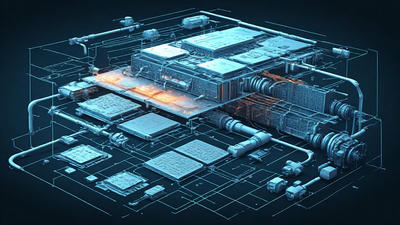
The move to mandatory liquid cooling is not just a technical footnote. It is a structural change in how data centers are built and operated. It alters cost structures, creates new bottlenecks, and opens significant opportunities for vendors throughout the cooling ecosystem—from cold‑plate manufacturers and pump suppliers to coolant producers and systems integrators. This article explores why liquid cooling is crossing this threshold, how the supply chain is reacting, and what the transition means for operators planning the next generation of compute‑heavy infrastructure.
From air‑cooled racks to thermally constrained AI clusters
Traditional data centers were designed around air cooling: servers and racks with fans, airflow management via hot and cold aisles, and facility‑level HVAC systems that kept inlet temperatures within safe ranges. This model worked well when typical rack power hovered in the tens of kilowatts and individual CPUs operated at relatively modest thermal design points.
The rise of AI accelerators, dense GPUs, and high‑power networking has changed the thermal equation. Racks designed for large training clusters and high‑throughput inference can now reach or exceed 80–100 kilowatts, with individual accelerators drawing hundreds of watts. In these environments, air cooling struggles to remove heat efficiently without resorting to extreme airflow or uncomfortably low inlet temperatures.
As operators pushed air‑cooled designs to their limits, they encountered diminishing returns: higher fan power consumption, noise, mechanical complexity, and uneven cooling performance across dense racks. These constraints made it increasingly difficult to scale AI clusters within existing thermal envelopes, highlighting the need for more direct, efficient heat removal mechanisms.
Why liquid cooling becomes mandatory rather than optional

Liquid cooling’s transition from optional enhancement to practical necessity stems from several interlocking pressures that go beyond raw power density.
First, thermal headroom has become a gating factor for performance. High‑end accelerators and CPUs are designed to deliver their best performance within specific temperature ranges. Air cooling, especially in dense configurations, can struggle to keep components within these ranges under sustained heavy loads. Liquid cooling provides more stable and lower operating temperatures, enabling chips to maintain peak performance without thermal throttling.
Second, sustainability and energy efficiency goals push operators toward cooling methods that minimize overhead. Air cooling systems require significant fan power and often demand colder air, raising energy usage. Liquid cooling can remove heat more efficiently, reducing the energy devoted to cooling and helping operators meet efficiency targets and regulatory expectations.
Third, space and deployment constraints matter. Retrofitting existing facilities to support much higher airflow or larger air‑cooling infrastructure can be impractical. Liquid cooling solutions—cold plates, rear‑door heat exchangers, or immersion systems—can fit within existing footprints while enabling higher rack densities, making them attractive in space‑constrained data centers.
Collectively, these factors transform liquid cooling from a feature for extreme environments into a requirement for mainstream high‑power deployments. For certain classes of AI and accelerator‑heavy racks, planning without liquid cooling increasingly means planning for underutilized or thermally throttled hardware.
Liquid cooling architectures: cold plates, rear doors, and immersion
As liquid cooling adoption expands, different architectural approaches are gaining prominence, each with its own implications for supply chains and integration.
Cold plate direct‑to‑chip cooling. In this model, coolant flows through cold plates attached directly to high‑power components—CPUs, GPUs, accelerators. Heat is transferred efficiently from the chip to the liquid, which then passes through manifolds and heat exchangers. This approach offers precise, targeted cooling and is widely favored for dense, high‑end racks. It requires robust cold plate manufacturing, leak‑resistant plumbing, and data‑center‑level coolant distribution.
Rear‑door heat exchangers. Rear‑door units mount heat exchangers on the back of racks, using liquid to absorb heat from exhaust air before it enters the broader room. This hybrid approach helps bridge between air and liquid cooling, reducing room‑level thermal loads while maintaining largely air‑cooled server internals. It is attractive for retrofits and transitional deployments.
Immersion cooling. In immersion systems, entire servers or boards are submerged in specially formulated dielectric fluids. Heat is transferred directly from components to the fluid, which is circulated and cooled via external systems. Immersion offers excellent thermal performance and simplifies airflow considerations, but it introduces new requirements in terms of materials compatibility, maintenance practices, and facility design.
Each architecture creates distinct demands on supply chains: cold plates and manifolds for direct‑to‑chip, heat exchanger units and retrofitting kits for rear‑door solutions, and specialized fluids and tanks for immersion. As adoption grows across all three, demand surges not only in hardware but also in engineering and integration services.
Coolants and materials: chemistry moves to center stage
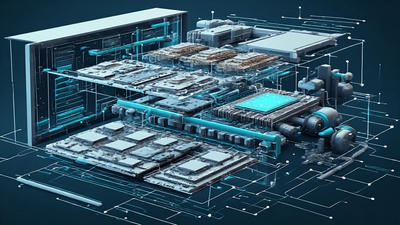
Liquid cooling’s rise shifts some of the complexity from airflow to fluid properties and material compatibility. Selecting and managing coolants becomes a central engineering and operational consideration.
Water‑based coolants, often with corrosion inhibitors and additives, dominate many direct‑to‑chip and rear‑door systems. These solutions must balance thermal performance, material compatibility with metals and seals, microbial control, and long‑term stability. As more racks adopt liquid loops, demand grows for high‑quality coolant formulations and monitoring tools.
Immersion systems rely on dielectric fluids—synthetic oils or engineered fluids—that can safely contact electronics without causing short circuits. These fluids must offer favorable thermal properties, chemical stability, low volatility, and compatibility with plastics and elastomers used in hardware. Their cost, recyclability, and environmental profile also influence adoption.
As liquid cooling becomes mandatory, suppliers of coolants and related materials see surging demand. At the same time, operators become more attentive to fluid lifecycle management: filtration, replacement schedules, and disposal or recycling. This adds a chemical axis to data‑center operations that previously focused mainly on air and electricity.
Infrastructure upgrades: manifolds, CDU units, and facility plumbing
Moving to liquid cooling requires not only component‑level changes but also facility‑level infrastructure upgrades. Manifolds, coolant distribution units (CDUs), piping, and monitoring systems must be integrated into new and existing data centers.
Manifolds distribute coolant to individual racks or servers, ensuring balanced flow and reliable connections. CDUs act as intermediate systems that transfer heat from server‑level loops to building‑level chilled water systems or external heat rejection units. Piping must be laid out with attention to leak prevention, maintenance access, and redundancy.
These infrastructure pieces represent a substantial new demand category for mechanical and thermal engineering firms, as well as for vendors of valves, pumps, sensors, and control systems. As more operators adopt liquid cooling, the market for data‑center‑grade plumbing and distribution hardware expands rapidly.
Integration complexity also drives demand for design and consulting services. Facilities must coordinate electrical, mechanical, and IT planning to ensure that liquid cooling systems align with power distribution, rack layouts, and maintenance workflows.
Supply chain demand surges: who benefits and where stress appears

The transition to mandatory liquid cooling translates directly into supply chain demand surges across several categories, some of which were relatively niche before.
Manufacturers of cold plates, connectors, and manifolds see increased orders as more server and accelerator designs incorporate direct‑to‑chip cooling. Companies that produce rear‑door heat exchangers, immersion tanks, and associated hardware experience similar growth as operators explore different architectural options.
Pump and valve suppliers benefit as operators build more robust coolant circulation systems, requiring reliable, data‑center‑grade components with monitoring and control capabilities. Sensor and telemetry vendors see rising demand for flow meters, temperature probes, and leak detection devices integrated into management platforms.
On the chemical side, producers of coolants and treatment solutions face growing volume requirements and stricter performance expectations, especially as operators seek long‑life, low‑maintenance fluids. Materials suppliers—metals, seals, plastics—are pushed to ensure compatibility and durability in liquid environments.
These surges can also create stress points. Lead times for specialized components may lengthen; qualified integration firms may be in short supply; and competition for experienced thermal engineers intensifies. Managing these stresses becomes an important part of data‑center planning in the liquid cooling era.
Operational implications: maintenance, monitoring, and risk management
Liquid cooling’s spread brings operational changes that operators must address proactively. Maintenance routines, monitoring strategies, and risk management practices evolve to reflect new elements in the environment.
Routine maintenance now includes coolant inspection, filter changes, leak checks, and pump performance evaluations. Staff training expands to cover fluid handling, safe shutdown procedures, and response plans for leaks or component failures. Documentation and standard operating procedures must be updated accordingly.
Monitoring systems gain more complexity: operators track coolant temperature, flow rates, pressure, and leak sensors alongside traditional metrics like rack inlet temperatures and fan speeds. Data‑center management platforms integrate these metrics into dashboards and alerting schemes.
Risk management frameworks adjust to new failure modes—coolant leaks, pump outages, manifold issues—adding redundancies and contingency plans. As liquid cooling becomes mandatory, operators treat these risks as core concerns rather than peripheral issues, investing accordingly in reliability and resilience.
These operational shifts, while significant, are part of the broader maturation of data‑center infrastructure: as power and thermal loads increase, the systems that manage them become more sophisticated and central to uptime assurance.
Cost models and ROI: factoring in liquid cooling as a baseline
Moving liquid cooling from optional to mandatory affects financial models for new deployments. Operators and investors must incorporate cooling costs and benefits into long‑term planning and ROI analyses.
Upfront capital expenses rise: cold plates, manifolds, CDUs, and facility plumbing add to the bill of materials. However, these expenses can be offset by the ability to deploy higher‑density racks, reduce space requirements, and avoid extensive upgrades to traditional air‑cooling systems.
Operational costs change as well. Liquid cooling can reduce fan power and room‑level HVAC energy use, improving overall efficiency. It can also mitigate hardware failure rates and thermal throttling, improving performance and potentially extending equipment lifespans.
When modeling ROI, operators weigh these factors against the added complexity of liquid systems. In high‑power, accelerator‑dense environments, the balance increasingly favors liquid cooling as an essential enabler of performance and capacity rather than a discretionary upgrade.
As more data centers embed liquid cooling into baseline assumptions, financial discussions move from “Is liquid cooling worth it?” to “How do we implement liquid cooling most effectively for our workloads and facilities?”
Strategic implications for vendors and operators
The rise of mandatory liquid cooling creates strategic implications across the ecosystem. For vendors, it opens avenues for differentiation and long‑term partnerships. For operators, it influences site selection, architecture decisions, and risk posture.
Cooling vendors can compete on efficiency, reliability, integration simplicity, and lifecycle support. Those who offer well‑engineered solutions with strong monitoring and service models can build deep relationships with major cloud and enterprise customers as trusted infrastructure partners.
Server and accelerator manufacturers must decide how far to integrate cooling elements into their designs. Some may offer turnkey liquid‑ready systems; others may rely on partners for cold plates and manifolds. Alignment between compute vendors and cooling suppliers becomes an important strategic consideration.
Operators, meanwhile, may use cooling strategies as part of broader competitive positioning. Facilities that support higher densities with robust liquid cooling can offer more attractive AI and high‑performance compute services. Environmental and sustainability narratives increasingly include cooling efficiency as a key pillar.
In this landscape, liquid cooling is not just a technical choice; it becomes part of the strategic fabric of data‑center differentiation and long‑term planning.
Conclusion: liquid cooling as the new normal for high‑power compute
The transition of liquid cooling from optional to mandatory in many high‑power compute environments marks a turning point in data‑center design. As AI accelerators, GPUs, and dense silicon push racks beyond the comfortable limits of air cooling, liquid systems emerge as the practical path to sustaining performance, efficiency, and density.
This shift drives surging demand across the cooling supply chain—hardware, fluids, infrastructure, and services—while reshaping operations and cost models. For vendors and operators alike, treating liquid cooling as a baseline requirement rather than an exotic addon is becoming essential to building and maintaining competitive, future‑proof infrastructure in an era defined by relentless growth in compute power and thermal challenges.